
The Modern Reader
Children’s Books Not Just for Children

When I worked for a major music company, I almost got fired because I challenged categories. What makes Black music black, for example? Do the artists have to Black? What about bands that are mixed race? Or, does the audience have to be mostly Black? That would be a small percentage of the population compared to what a hit record requires. Literature doesn’t have racial borders, but there are other barriers. Literary readers tend to look down on the airport thriller crowd, despite writers as accomplished as John le Carré. Science fiction has been in its own ghetto despite crossover artists such as Emily St. John Mandel.
But the widest gap in the fiction world comes between what’s considered Adult and what’s considered Children’s Books. (I won’t get into Young Adult because that’s just a hormonal minefield filled with explosivity for all ages).
Some adult books pretend to be children’s books in order to make a point. I’m looking at you Aldous Huxley because Animal Farm isn’t about a lot of cute fuzzies. But Charlotte’s Web by E.B. White is about farm animals (and a special arachnid) with a lot to say to adults about human nature. It helps that E.B. White, a long-time workhorse for The New Yorker is an exemplary stylist. (Ie, his grammar book written with William Strunk, The Elements of Style.)
The big rule in The Elements of Style, as in life, is the most difficult; omit needless things. The beauty of children’s literature for adults is that in simple language it gets right to the heart of things. There’s no better example of this then The Little Prince. Again, the main character is theoretically, though not specifically, a child. But the lessons about love and compassion and truth are desperately needed for so-called grown-ups.
I turn to those books that charmed me into reading whenever I feel the weight of adult concerns in modern novels, or I need a quicker pick-me-upper. Does any adult novel match the elegant wisdom in the Winnie the Pooh books by A.A. Milne? I live by the adage, “People say nothing is impossible, but I do nothing every day.” Take the mountain of self-help books and burn them as light to read about Christopher Robbins and friends in the Hundred Acre Wood.
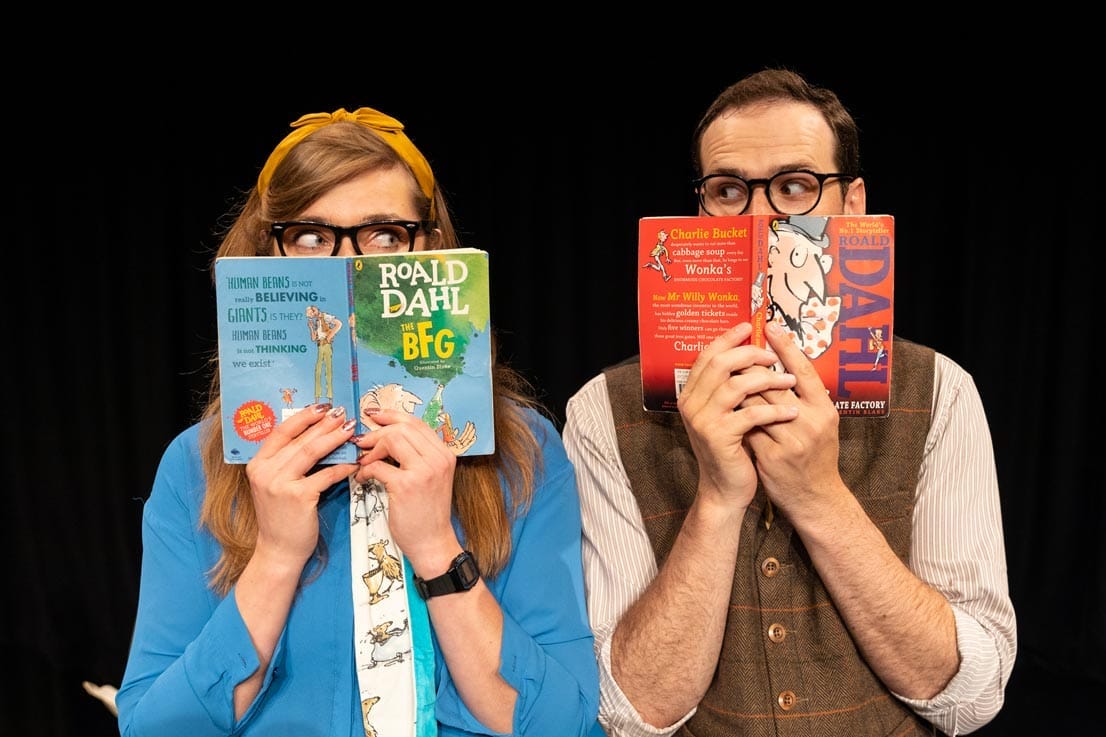
But if you’re one of those adults who like it dark, has there ever been a darker writer than Roald Dahl. He’s got it all: sadism, misogyny, profanity, vulgarity, indecency, everything that would set a Human Resources officer’s hair afire. Delicious.
If we really want to talk about the stuff of childhood nightmares, how about The Wizard of Oz by L. Frank Baum? Dorothy, the hero, commits unprovoked murder and tries to get away with it by aligning with a liar, the Wizard, who sends her on a suicide mission to kill his enemy, the Wicked Witch of the West (great stuff for kids). And isn’t Peter Pan by J.M. Barrie, a harbinger of toxic masculinity? But, so what? These problematic books have more insight to the way humans really are than most adult novels.
The truth is what makes a good reader is boundless curiosity, the ability to withhold judgment, patience to let the story play out, and a comfortableness with ambiguity, all touchstones of the best in literature for children and adults.
—Stuart Matranga